Five Quiet Experiments to See How a Place Is Put Together
Noticing how a place is put together is a quiet skill. It is less about finding a single picturesque view than about understanding the parts that make a street, room, or park behave the way it does. These five small experiments are designed to be done in order. Each is short, points out a common mistake, and offers a simple correction. Together they build a reliable way to read and represent ordinary places.
Experiment 1 — Find the Dominant Edge (5–10 minutes)
Step away from detail and ask: what edge organizes the view? An edge can be a curb, a row of trees, the top of a wall, or the line where floor meets wall.
- Do: Stand for a few minutes and point to the single edge that feels most decisive.
- Common mistake: Trying to include every edge you notice, which makes the scene feel cluttered.
- Correction: Choose one dominant edge and imagine everything else arranged around it. Sketch or write a single line to represent that edge.
Why this helps
Edges anchor composition. By choosing one, you begin to simplify and reveal the structure of the place.
Experiment 2 — Spot the Scale Anchors (5 minutes)
Now look for objects that tell you the size of everything else: a door, a bench, a bicycle, a person. These are your scale anchors.
- Do: Identify two or three anchors and note their relationship (for example: bench in front of low wall, door two times taller than bench).
- Common mistake: Relying on memory of objects rather than observing their immediate proportions.
- Correction: Measure with your eye: compare heights visually and mark relative sizes quickly in a sketch or list.
Why this helps
Anchors convert visual impressions into understandable proportions. They keep your description honest.
Experiment 3 — Map the Movement Lines (10 minutes)
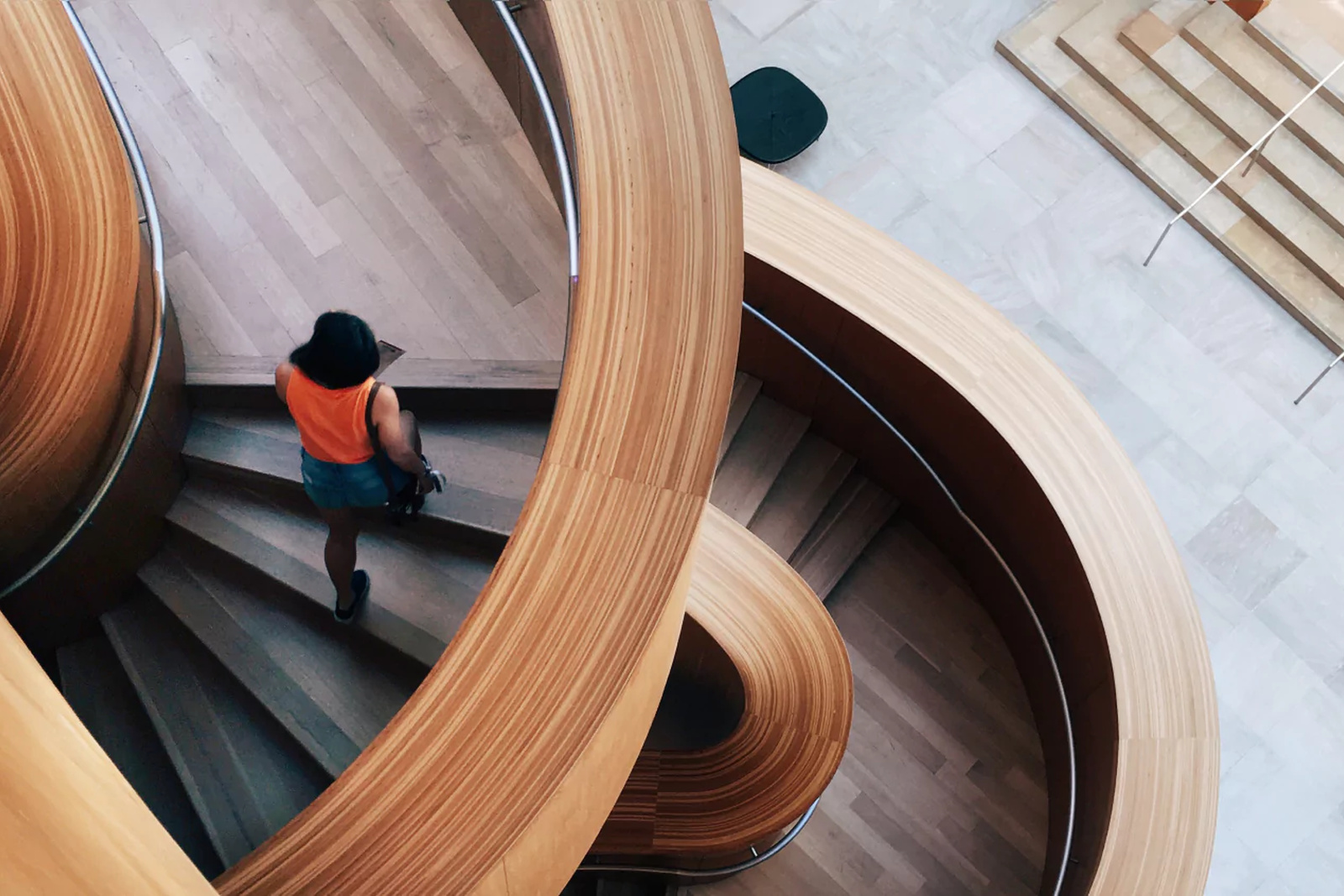
Watch for where people, bikes, or imagined paths move. Are they guided by a lane, a stair, a sequence of trees? Draw the likely paths with simple arrows.
- Do: Sketch three arrows showing the strongest directions of movement.
- Common mistake: Focusing only on static objects and ignoring how the place is used.
- Correction: Add motion lines even if the place is empty—imagine how movement would occur.
Why this helps
Movement clarifies function. Paths reveal entrances, focal points, and blind spots.
Experiment 4 — Note Materials and Joints (10 minutes)
Examine three materials and the lines where they meet: timber beside concrete, glass within metal frames, or grass meeting paving.
- Do: Write the material and describe the joint in a single short phrase (for example: “smooth grey paving, slightly higher than soil”).
- Common mistake: Listing materials without noticing how they are connected or change at edges.
- Correction: Focus on the seams and transitions; these often determine how a place wears and feels.
Why this helps
Materials and joints tell you about durability, maintenance, and the sensory qualities of a place—its textures, sounds, and footing.
Experiment 5 — Make a Five-Line Composition (10–15 minutes)
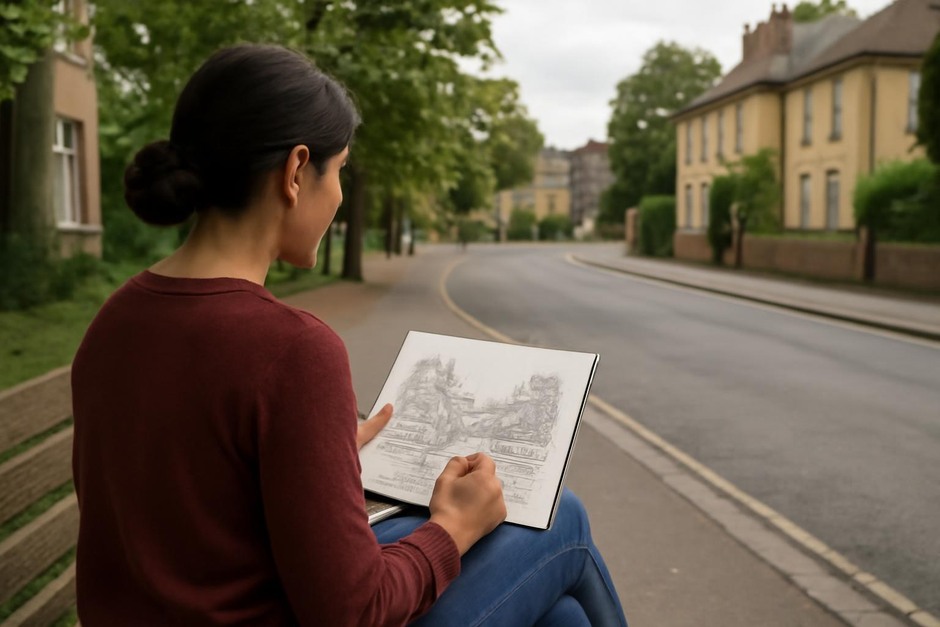
Using what you learned, make a short composition: a five-line sketch or a five-sentence description that captures the place’s order. Keep it simple: one line for the dominant edge, one for scale anchors, one for movement, one for materials, and one for mood or use.
- Do: Create the five lines without reworking them—this is about perception, not perfect drawing.
- Common mistake: Trying to produce a finished drawing or a lyrical piece instead of a clear structural note.
- Correction: Treat this as a field note: short, specific, and repeatable. If sketching, use quick marks; if writing, use brief phrases.
Why this helps
The five-line exercise synthesizes what you observed and produces a portable record. Over time, these short studies make it easier to describe or sketch any place efficiently.
These experiments are intentionally small. Do them in sequence at one spot, or repeat them across different places to compare. The common mistakes—trying to record everything, relying on memory, ignoring movement, skipping seams, and overworking the result—are easy to fall into. The corrections are simple: choose, measure, imagine, notice, and synthesize. Practiced calmly, this checklist helps you see the quiet architecture of everyday places.